Nagi Gompa Day Hiking date availability
Itinerary
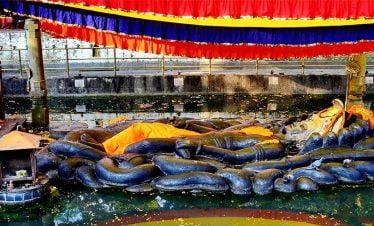
Your guide will come and meet you in the lobby of your hotel around 9am. You'll be driven to Budanilakantha located on the Shivapuri foothills which is the holiest shrine for Hindu followers in Nepal. This Narayan (Lord Vishnu) Statue is believed to be 1000 years old. You'll start your hike through the dense forest area inside Shivapuri national Park. This park is dotted with several waterfalls and typical village settlements. The Shivapuri area is famous for bird watching tours, sighting wildlife and seeing wild fauna in its natural habitat. You'll reach Nagi Ghompa and spend some time there as you trek down to the Budanilakantha area. You'll visit a local temple there. You'll then drive back to Kathmandu and be dropped off at your hotel.
Nagi Gompa is a Buddhist monastery located in the hills north of Kathmandu, Nepal. It is a popular destination for day hikes due to its beautiful scenery, cultural significance, and accessibility from the city.
The hike to Nagi Gompa starts from the town of Shivapuri and takes around 3-4 hours to complete. The trail is well-maintained and offers stunning views of the surrounding mountains and forests. Along the way, hikers may encounter local villagers and wildlife such as monkeys and deer.
Once you arrive at Nagi Gompa, you can explore the monastery and its surrounding grounds. The monastery is home to a community of nuns and offers a peaceful retreat from the hustle and bustle of Kathmandu. Visitors can learn about Tibetan Buddhism and participate in meditation sessions.
After visiting the monastery, hikers can either return to Shivapuri or continue on to other nearby attractions such as the village of Kapan or the Buddhist stupa at Boudhanath.
The best time to do Shivapuri Nagi Gompa Day Hike
Shivapuri is a short and easy climb near Kathmandu that can be done at any time of year. As a result, walking to Shivapuri can be planned at any time of year. However, the greatest season to hike Shivapuri is from September to early June.
The weather and temperatures are pleasant; the scenery is breathtaking, and the skies are mainly clear. Throughout the trekking trail in the spring (March to May), you will be greeted by rhododendron and other seasonal flower blossoms.
During the rainy months, particularly July and August, you may encounter slick stone steps but the hike is possible. Winter is also a great time to hike to Shivapuri Hill to experience the snowfall around the Kathmandu Valley.
Since day hikes are single-day trips, it doesn’t require accommodations so it is not included in the package.
However, we offer 3-star category accommodation with breakfast on a twin/double sharing basis. But the accommodation can be modified as per the traveler’s interest, budget and availability. Luxurious resorts, standard hotels to comfortable guesthouses, lodges, and homestays are available in Kathmandu.
Nagi Gompa Hike Difficulty Level
The Shivapuri Nagi Gumba Hike is a short day climb in Kathmandu and is rated as an easy hike within the Shivapuri-Nagarjun national park. The trail is well-established, well-maintained, and comfortable. Stairs are located throughout the hiking path to assist you in walking even if the terrain is treacherous.
Hikers with a moderate degree of fitness and a strong mental drive can easily accomplish this hike. Throughout the route, the hiker should walk gently uphill and downhill for over 6 hours.
Note: Hiking alone inside a national park is strictly prohibited; you must be accompanied by a guide (Tour/Nature). But, if you are walking alone, It is a must hike with a Guide, But Hiring a Guide on the Spot will cost unusually expensive.
Meals During the Hike to Shivapuri Nagi Gumba
Generally, if the location we are hiking towards consists of restaurants or cafes then we will have our meals and tea/coffee in those local restaurants/cafes. But if the destination doesn’t have any restaurants then our guide will take a packed lunchbox both veg and non-veg as per travelers’ choice, and a water bottle with him/her. We will enjoy the hygienically packed lunch overlooking the mesmerizing scenery seen from the hilltop.
What to Expect
Start your day with morning pickup by your guide and a scenic drive to the village of Budanilakantha. Located in the Shivapuri foothills, Budanilakantha contains the most sacred Hindu shrine for Hindu followers in Nepal. The shrine holds a Narayan (Lord Vishnu) statue that measures 16 feet (5 meters) and was carved from a single stone more than 1,000 years ago. From there, begin hiking through thick forest of Shivapuri Nagarjun National Park, passing waterfalls and typical villages. Keep an eye out for wildlife including a variety of birds. When you arrive at the convent of Nagi Ghompa, enjoy time to soak in the views and learn about the daily life of the nuns. Then trek down to the Budanilakantha and visit a local temple. At the end of your trek, your vehicle meets you to take you back to your Kathmandu hotel.
Hiking Time
This hike takes about 1.5 – 2 hours up and back. It is beautiful at the top and I recommend having a snack or picnic there. I’d plan to leave an extra hour for hanging out near the monastery.
Kathmandu Valley is surrounded by beautiful hill stations around its perimeter. So it is of no surprise that Kathmandu is really popular for day hikes. Phulchowki is the highest hill surrounding Kathmandu Valley located at an altitude of 2750 meters above sea level. To help you pack efficiently, we have prepared a gear list for Phulchowki Hike based on seasons. Nepal has four primary seasons:-
Winter: Winter in Nepal falls in January and February. It starts getting cooler after Christmas. The temperature is usually 0-4°C in the morning, 10-12°C at noon, and -1 to 0°C at night. So if you are planning to hike here any time after Christmas to the end of February then we suggest you wear long-sleeved t-shirts, hoodies or sweater/fleece, windproof and preferably waterproof jackets because Phulchowki has temporary snowfall during winter. Similarly, we suggest wearing beanies/hats, gloves, trousers, sports shoes/hiking hoots, and thermals if you prefer an extra layer of warmth. Carrying a water bottle, sunglasses, sunscreen, and hiking poles would be ideal.
Spring: March to May are spring in Nepal. The temperature in these months during the morning ranges from 10-12°C, 22-24°C at noon, and 14-16°C at night. Since the weather is pleasant during spring, apart from the basic essentials mentioned below, all you need is some casual shirts, shorts or trousers, a couple of long sleeves, sports shoes/hiking boots, a water bottle, sunscreen, sun hat/cap, sunglasses, and an overall/light jacket because it might get a bit chilly at the top.
Summer/Monsoon: June, July, August, and September are summer months in Nepal. But we have a summer monsoon that occurs from Mid-June to Mid-September. The temperature of Kathmandu ranges from 18-20 °C in the morning, 28-32°C at noon, and 16-18°C at night. We do not suggest you hike while raining but apart that that, Summer Hiking in Phulchowki is ideal too. So, besides the regular items mentioned below, casual cotton wears, sunglasses, a sun hat/cap, an umbrella, or a raincoat are some essentials for the summer. Because this hike takes place in a lush forest, there might be some leeches if it rains the previous night. These leeches aren’t harmful but might cause nuisance so the trick is to carry salt and if leeches try and stick to your body then you could sprinkle salt.
Autumn/Fall: October, November, and December are autumn in Nepal. It is the best time for the Phulchowki hike due to the delightful weather and visibility of beautiful vistas seen along the way and from the hilltop.
The temperature during fall ranges from 8-10 °C in the morning, 22-25°C at noon, and 5-7°C at night. December is comparatively cooler than the other two months.
While hiking around Kathmandu during fall, you would be good to go with fleece/sweater or hoodies, hat/beanie, shawl/scarf, trousers, long-sleeved shirts, light jackets, or overalls, a water bottle, sunglasses, sunscreen, and hiking boots or sports shoes.
Trip Highlights of Nagi Gompa Day Hiking
- Hiking to the second tallest hill around Kathmandu
- Hiking to the second tallest hill around Kathmandu
- A spectacular view of the Kathmandu valley, Langtang mountain range, Mt. Manaslu, and nearby summits on a clear day
- Walk inside the Shivapuri National Park and witness unique flora and fauna
- Worth seeing sites such as Budhanilkantha, Nagi Gompa, and Bagdwar, along with Shivapuri Hill itself
- VISIT TWO FASCINATING BUDDHIST AND HINDU RELIGIOUS SITES
- UNTOLD STORIES RELATED TO HISTORIES AND CULTURE
- Beautiful Pine forest including Rhododendron
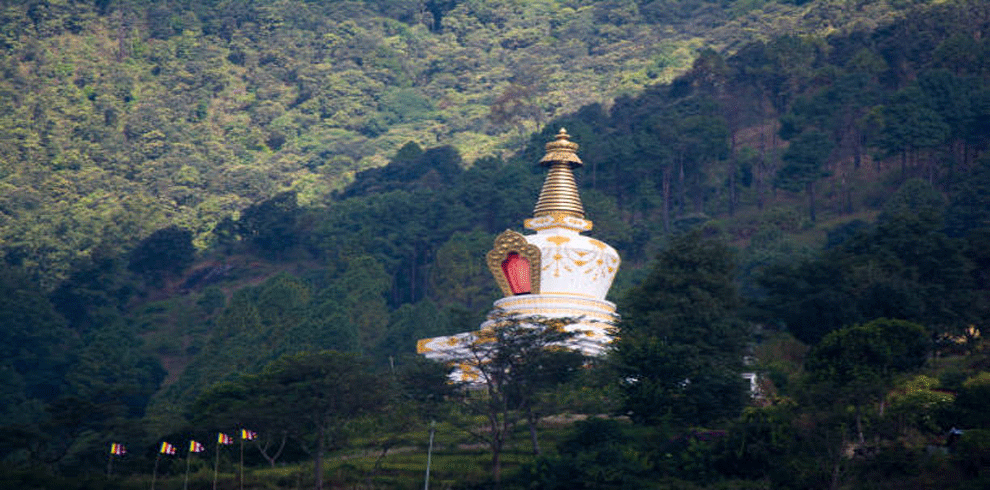
- Impressive Buddhist Monastery and Stupas
- Awesome Hiking Experience
Cost includes of Nagi Gompa day hiking
- Fluent English speaking and trained, Government license holder guide (spiritual) including all his salary, food, drinks, accommodation, transport and insurance during the tour.
- All transportation charge during trip.
- A/C car or tourist micro bus or tourist bus depending upon your size.
- All government taxes and office expenses.
- Entrance fees & permit
Cost Excludes of Nagi Gompa day hiking
- Nepal entry visa fee (you may easily issue the visa upon your arrival at International Airport - Kathmandu). You need 30$ dollar visa fee for 15 days, cash money will be easier.
- Your Travel and medical insurance.
- All the alcoholic and non alcoholic hot and cold drinks.
- Dinner
- Tips for the guide and driver (Tipping is expected).
While I think that most people would enjoy the hike and visiting the monastery, I would only recommend this place for locals. Unfortunately, the fees to enter Shivapuri National Park are high for foreigners. If you plan to spend the entire day or do an overnight in the park, it’s worth it. But, this is a rather short hike and I felt it wasn’t worth the high price tag overall.
The policies on face masks and attendee health are: Face masks required for guides in public areas Face masks provided for travelers
The policies on sanitization are: Hand sanitizer available to travelers and staff Transportation vehicles regularly sanitized
The start of this hike is at the Shivapuri Nagarjun National Park Gate just north of Shiva Mandir (the Sleeping Vishnu) in Budhanilkantha. It’s very easy to take a taxi or Pathao (the Uber of Nepal) here to start your hike. From here, you can follow the dirt road to the monastery or take the shortcuts which cut through the woods and feel a little more like a proper hiking route.
More Information About Nagi Gompa day hiking
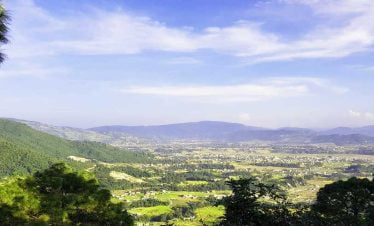
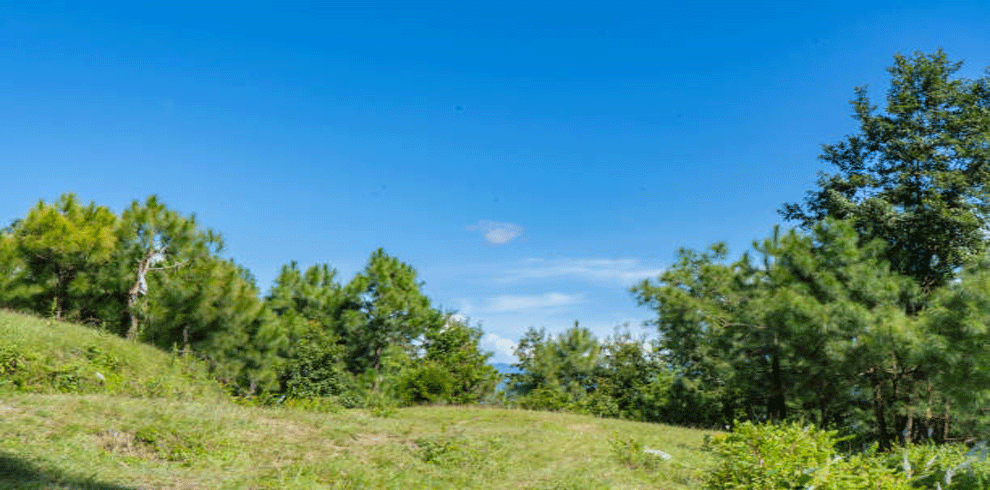
Nagi Gompa day hike is one of the pleasant one-day hiking trips in the northern Kathmandu valley, offering a great walking experience and as well as excellent views of local villages and the Kathmandu valley. The fairly easy trail goes through beautiful pine forests and meadows along the ridge. Nagi Gompa is located in a quiet location at the height of 2563m in a protected area of Shivapuri National Park. This great nunnery gompa is home to more than 100 Buddhist nuns, where they practice their spiritual lessons and meditation.

The journey commences with a 45-minute drive to Budhanilkantha Temple which is nestled at the foothills of Shivapuri. This Hindu pilgrimage site is also called Narayanthan Temple, where there is a giant sleeping Vishnu statue on a pond and is worshiped by Hindu devotees. A short drive further from the temple is the entrance to the Shivapuri Nagarjun National Park where the hiking begins.
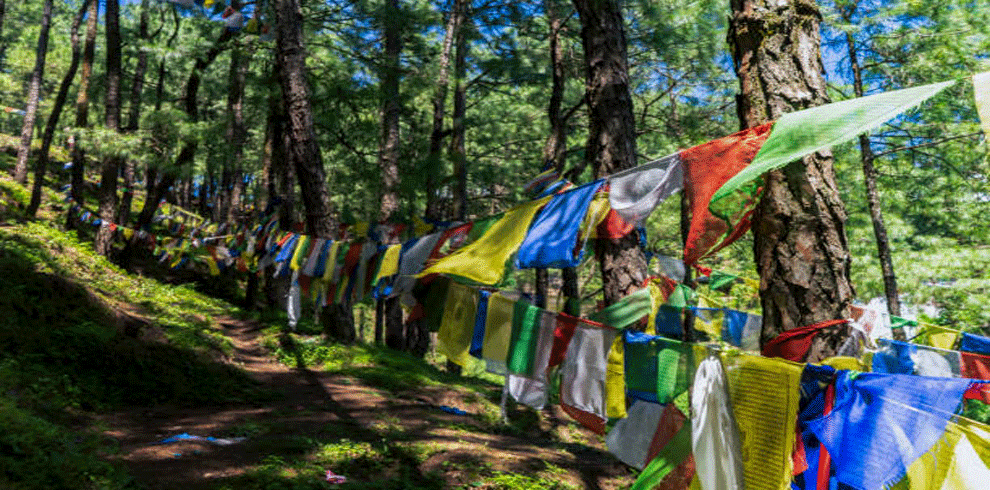
The first portion of the hike is relatively easy on a desert road before climbing above the steep stone stairs to Nagi Gumba in the northeast. It is a 2 hours hike to Nagi Gumba from the entrance. Nagi Gumba is a Buddhist monastery on Shivapuri Hill dedicated to the nuns. Meditation is highly practiced here by the locals as well as the foreigners. The fluttering prayer flags and the nuns chatting and working in the neighborhood will immediately identify the monastery. The monastery also offers a panoramic view of Kathmandu and the Langtang Himalayas on a clear day.
The trail from the monastery goes uphill through oak and rhododendron woodlands. The greenery becomes more verdant as we climb higher. We might get a glimpse of some unique birds and herbs as the Shivapuri National Park has a diverse range of flora and fauna. There are around 177 different bird species, as well as numerous unique orchids. This is also one of the valley’s last remaining regions of primary woods, and the forest is teeming with monkeys, leopards, and bears.
The hiking continues while soaking in the numerous views of the rising mountain peaks. There is a place called Baghdwar en route to the Shivapuri Summit, nearly 700 meters above the Nagi Monastery. Bagh means “tiger” and Dwar means “portal” in Nepali and it is a worth seeing site. We can see a little tiger-shaped gargoyle, situated where there is constant water flow. This is the main source of the holy Bagmati River and is also the biggest water supply to Kathmandu valley. A few yogis and sadhus can be seen around this area where you can interact with them and learn about their lifestyle.
Finally, 200 meters uphill from Bagdwar on a steep trail is the Shivapuri Hilltop at an altitude of 2563 m. Shivapuri is located to the north of Kathmandu, and is the second-highest hill surrounding the valley, after the famous hill – Phulchowki.
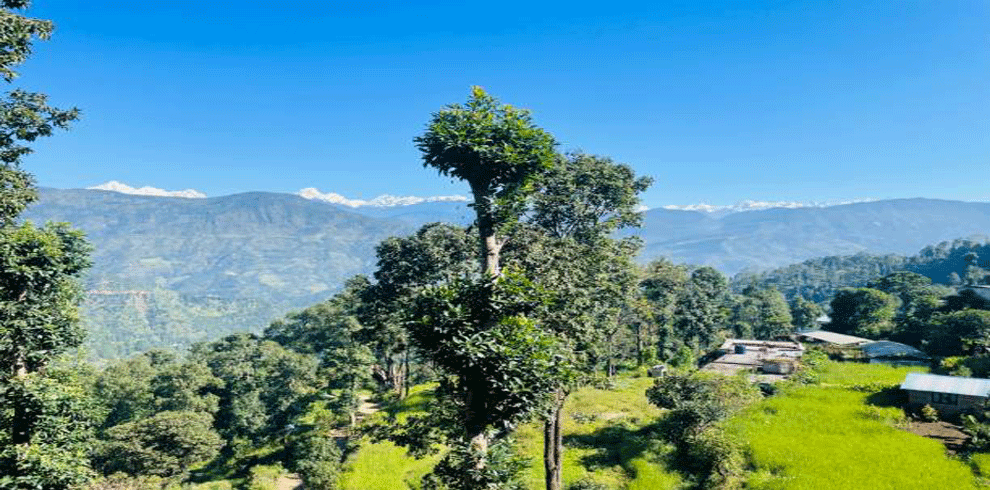
The summit of the hill provides us with a spectacular view of the mountains such as Mt. Ganesh Himal, Mt. Langtang Lirung, Mt. Langtang Ri, and Ganjala Peak, as well as Mt. Gaurishanker and many other summits on a clear day. A flat field marks the top of our goal, where we eat our packed lunch while taking in the fresh air and wonderful scenery.
Private half-day tour with Nagi Ghompa hike, from Kathmandu Keep an eye out for native wildlife in the national park Stop at Nagi Ghompa convent and meet some resident nuns Includes private guide and vehicle, and hotel pickup and drop-off in Thamel district of Kathmandu.
A Short History of Nagi Gompa Monastery
Nagi Gompa is a monastery set in the hills of Shivapuri National Park just outside of Kathmandu. This monastery is a school for Buddhist nuns who wish to learn to free their minds. In the early 1960’s, the monastery was given to Tulku Urgyen Rinpoche who was born in Eastern Tibet in the 1920’s.
He was recognized as a reincarnation of one of the 25 original students of the original Rinpoche (known as the second Buddha). He spent 33 years in Nagi Gompa and founded six other monasteries in Nepal. In 2015, the monastery was damaged by the earthquake and has since been rebuilt.
This trip is 100% customizable
 Big Group? We can help safer
Special request? We fit
Different Itinerary? We moderate
QUICK INQUIRY
KNOW BEFORE BOOKING
TRIP Deposit is 92% refundable & 100% Transferable
Middleman free & Transparent
READ the DEFINITION OF Trip Difficulty
USE Multiple Payment Options