
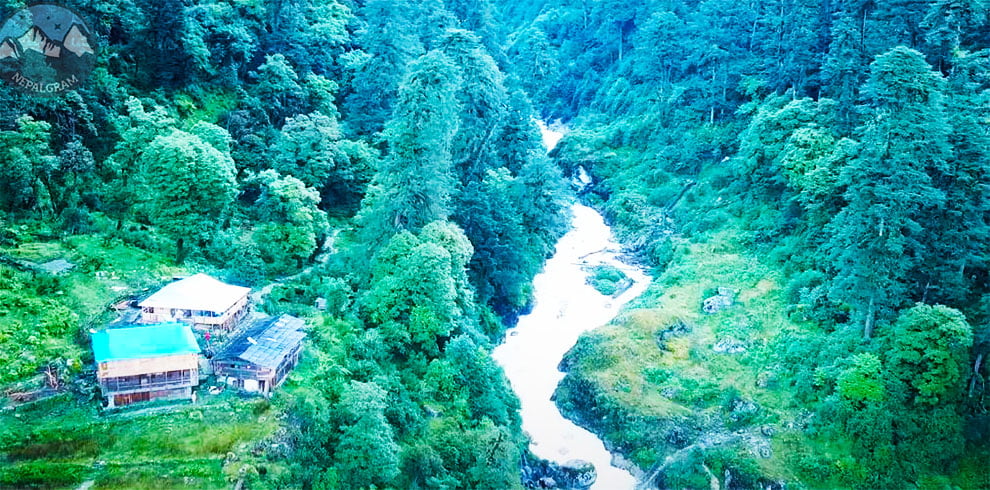

About Kanchenjunga basecamp trekking by overland
Best route for kanchenjunga base camp
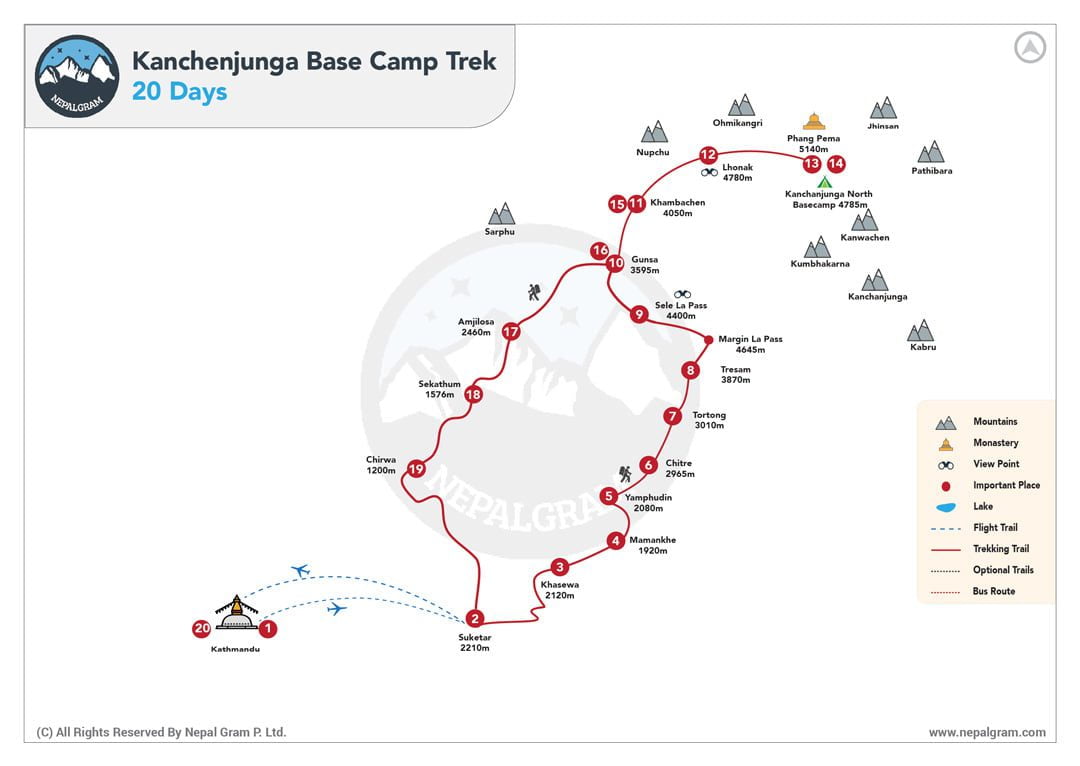
To reach the Kanchenjunga Base Camp from Phidim, which is in the eastern part of Nepal, you’ll typically start your journey by traveling to Taplejung, which is the nearest major town to the Kanchenjunga region. As Tapthok is a common starting point for many treks in the region, you can first travel from Phidim to Suketar. This journey can be done by bus or jeep, and it takes around 6-8 hours depending on road conditions.
then after we reach Amjilosa is a picturesque village located along the Kanchenjunga trekking route. It’s situated at an altitude of around 2,460 meters (8,070 feet) above sea level. The village offers basic accommodation options such as tea houses or guesthouses where trekkers can rest and replenish their supplies before continuing their journey.
Trek from Amjilosa to fale, where you’ll be surrounded by towering peaks and pristine wilderness. This segment typically takes around 5-6 hours. Continue trekking from fale to Ghunsa, a picturesque village with Tibetan influences. Along the way, you’ll pass through lush forests and enjoy panoramic mountain views. This part of the trek takes approximately 5-7 hours.
Trek from Ghunsa to Kambachen, where you’ll be treated to views of towering peaks and glaciers. This segment typically takes around 5-6 hours. rek from Kambachen to Lhonak, a remote settlement with breathtaking views of the Kanchenjunga massif. This part of the trek usually takes around 4-5 hours.
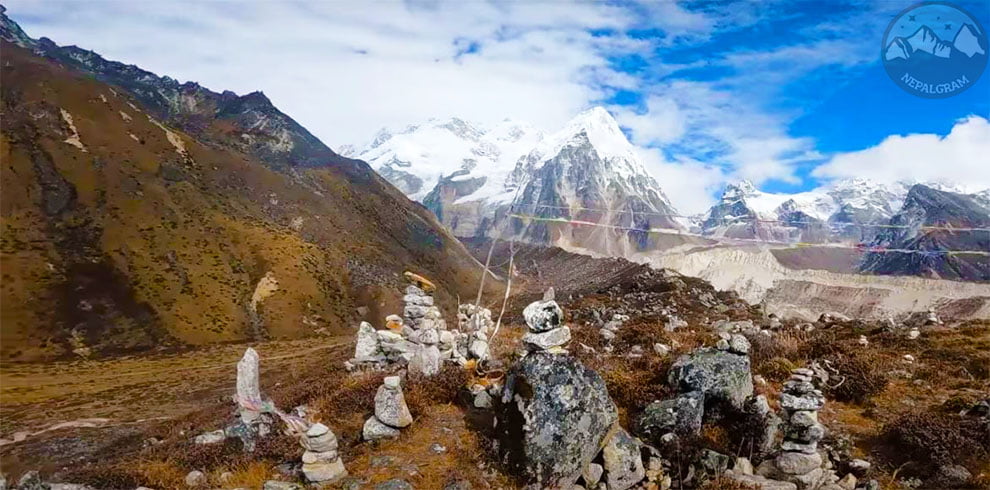
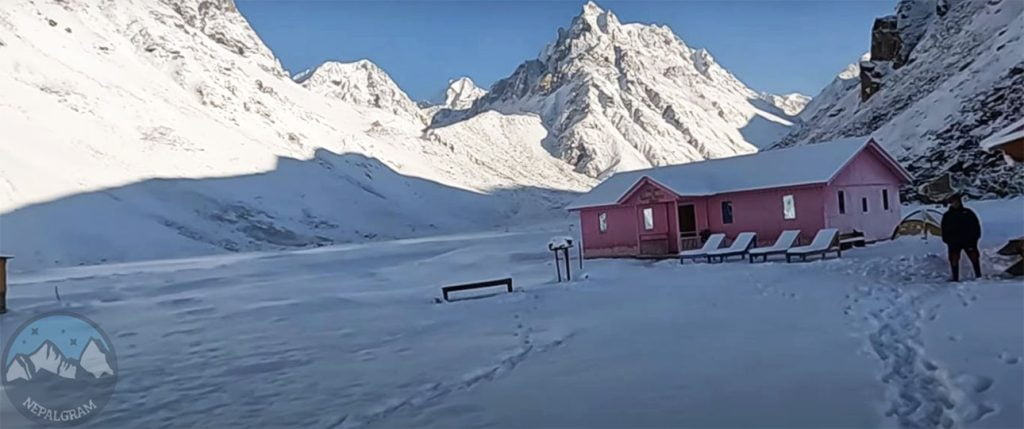
Finally, trek from Lhonak to Kanchenjunga Base Camp, also known as Pangpema. This is the closest you can get to the majestic Kanchenjunga peak without mountaineering. Enjoy the awe-inspiring views of the surrounding glaciers and peaks. This segment typically takes around 3-4 hours.
Kanchenjunga base camp temperature
The temperature at Kanchenjunga Base Camp varies depending on the season and the time of day. Generally, the base camp experiences cold temperatures due to its high altitude and mountainous environment. Here’s a breakdown of the temperature range you can expect:
Spring (March to May):
Daytime temperatures: During the daytime, temperatures at the base camp can range from around 5°C to 15°C (41°F to 59°F).
Nighttime temperatures: Nighttime temperatures can drop significantly, ranging from around -5°C to 5°C (23°F to 41°F).
Summer (June to August):
Daytime temperatures: Daytime temperatures can vary from around 10°C to 20°C (50°F to 68°F).
Nighttime temperatures: Nighttime temperatures may range from around 0°C to 10°C (32°F to 50°F), but they can sometimes drop below freezing.
Autumn (September to November):
Daytime temperatures: Daytime temperatures during autumn are similar to those in spring, ranging from around 5°C to 15°C (41°F to 59°F).
Nighttime temperatures: Nighttime temperatures can drop below freezing, ranging from around -5°C to 5°C (23°F to 41°F).
Winter (December to February):
Daytime temperatures: Daytime temperatures at Kanchenjunga Base Camp during winter can range from around -5°C to 5°C (23°F to 41°F).
Nighttime temperatures: Nighttime temperatures drop significantly during winter, often reaching well below freezing, with temperatures ranging from around -15°C to -5°C (5°F to 23°F).
Highlights of Kanchenjunga basecamp trekking by overland
- The trek starts with picturesque landscapes and stunning views of the eastern Nepali countryside as you leave Phidim and make your way towards the Kanchenjunga region.
- Along the trekking route, you'll encounter several ethnic communities such as the Limbu, Rai, Sherpa, and Tibetan peoples, each with their own unique culture, traditions, and architecture.
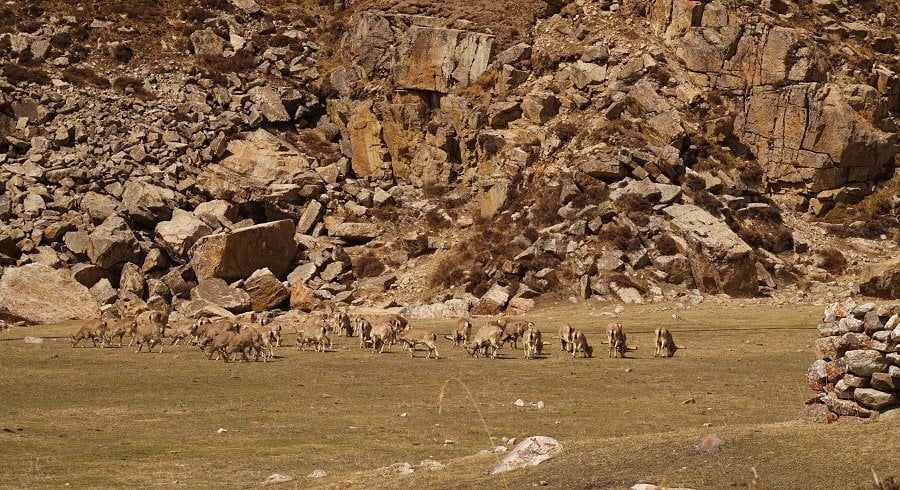
- The trek takes you through diverse ecosystems, including lush forests of rhododendron, oak, pine, and bamboo. This region is also home to a variety of wildlife, including the elusive snow leopard, red panda, musk deer, and numerous bird species.
- As you trek through the region, you'll pass through remote villages such as Chirwa, Sekathum, Amjilosa, and Ghunsa, where you can experience the local way of life and hospitality.
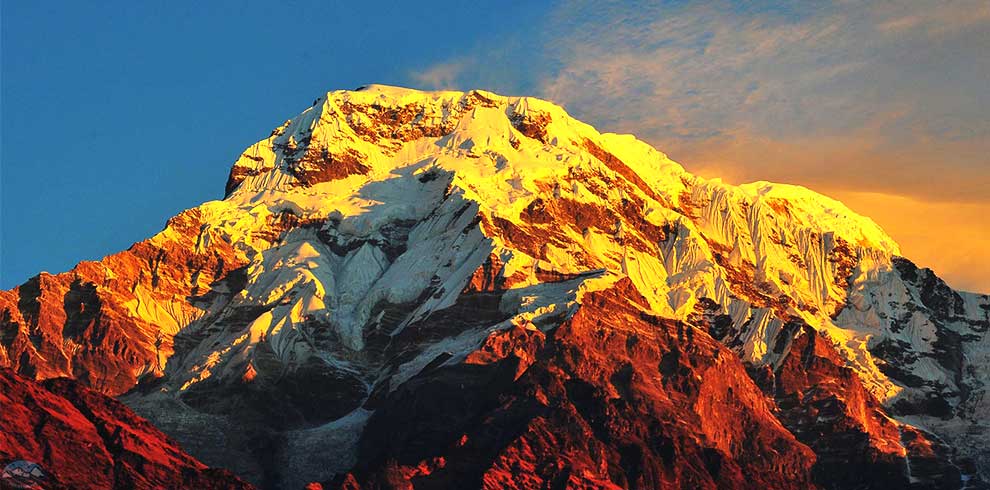
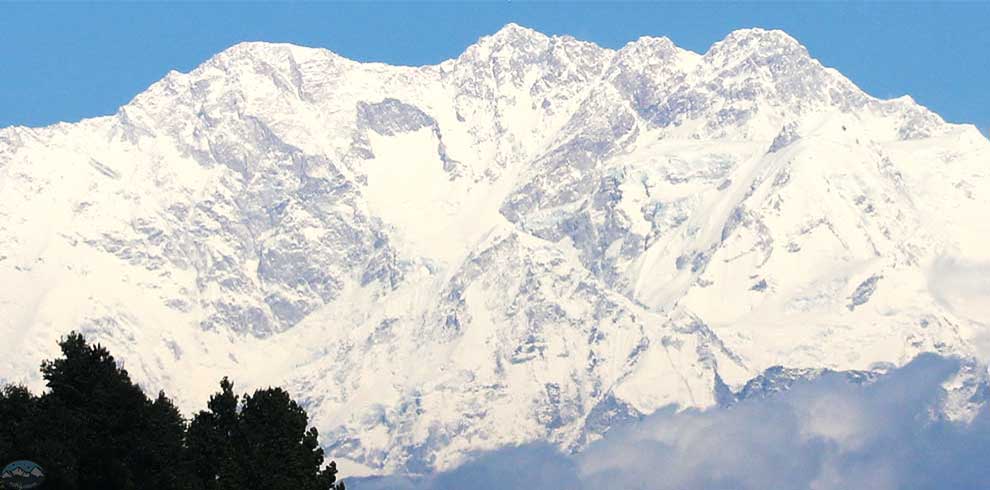
- Throughout the trek, you'll be treated to breathtaking views of snow-capped peaks, including Mount Kanchenjunga, the third highest mountain in the world, along with other prominent peaks like Jannu (Kumbhakarna), Yalung Kang (Kanchenjunga West), and Kabru.
- Ghunsa village is a major highlight along the route. It's a beautiful settlement with Tibetan influences, surrounded by stunning landscapes. It's also a great place for acclimatization and rest before continuing the trek.
- The entire trek lies within the Kanchenjunga Conservation Area, one of Nepal's largest protected areas, renowned for its biodiversity and natural beauty.
- Nearby attractions include the Yalung Glacier and Ramtang Monastery, which offer additional opportunities for exploration and sightseeing.
 Big Group? We can help safer