
About Kanchenjunga South Basecamp Trek
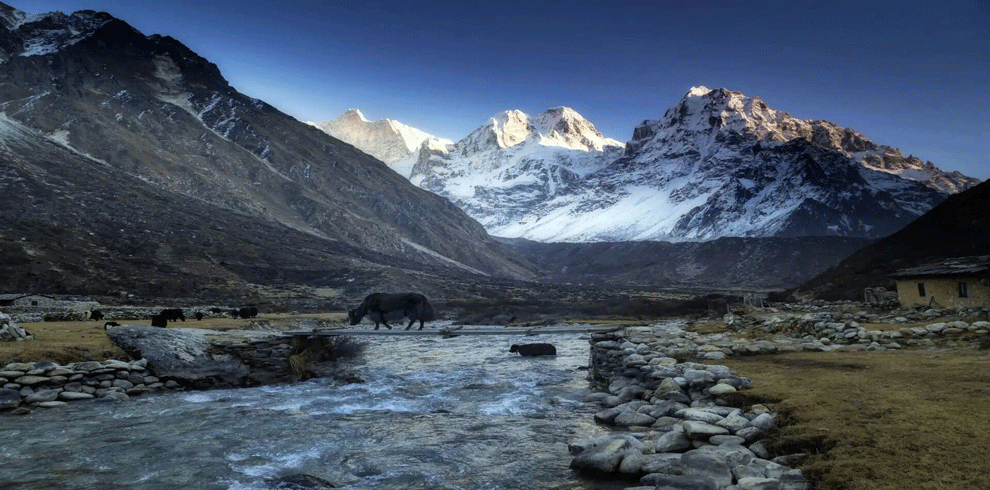
One of Nepal’s most thrilling off-the-beaten-path trekking adventures is the Kanchenjunga South Basecamp Trek. The walk provides a rare chance to discover the unspoilt environment of the Kanchenjunga Conservation Area, which is located in the country’s Far East.
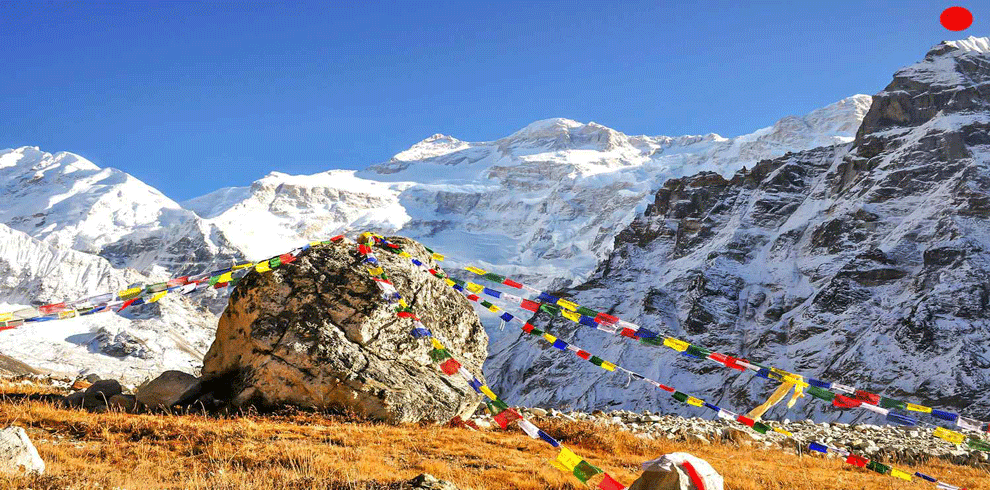
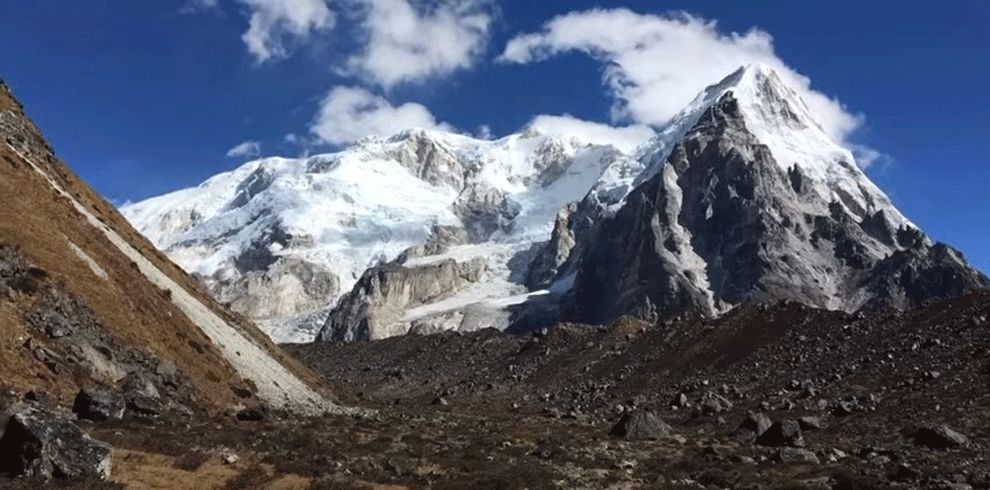
The trip offers breathtaking views of Kanchenjunga, the third-highest mountain in the world, while passing through a variety of environments, including glacial moraines, alpine meadows, and lush lowland jungles.
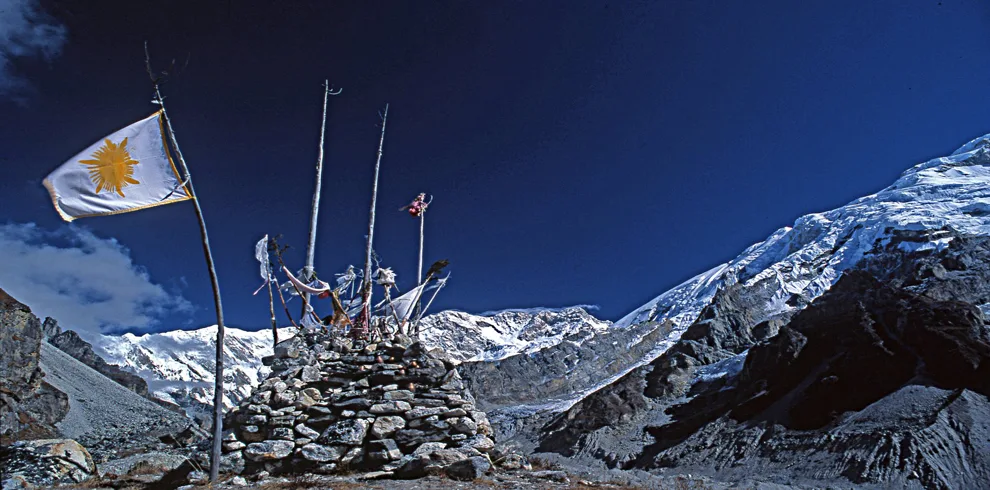
The 8,586-meter-tall Mount Kanchenjunga, which spans the boundary between Nepal and the Indian state of Sikkim, is the source of the trek’s name.
The name Kanchenjunga means “Five Treasures of Snow,” alluding to its five prominent summits, and the local communities regard it as a sacred mountain. Adventurers can go up close to this magnificent peak and witness its magnificence from a fresh perspective by trekking to the Kanchenjunga South Basecamp Trek.
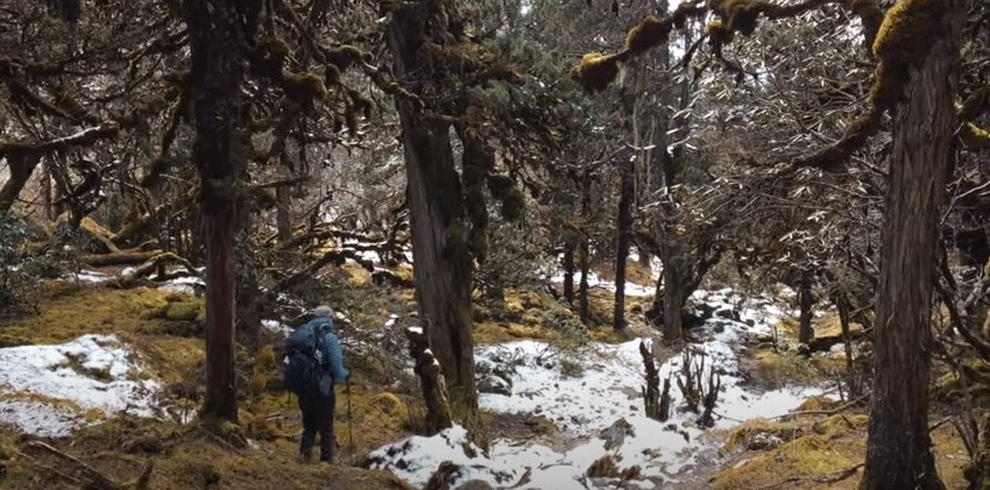
The trip itself is very fulfilling; it’s not just about the goal. You will have the opportunity to observe the region’s rich biodiversity as you travel through isolated settlements, thick forests, and high-altitude terrain.
Many endangered species, including as the red panda and the elusive snow leopard, can be found in the Kanchenjunga Conservation Area.
The Rai, Limbu, and Sherpa people are among the indigenous populations that have maintained their distinctive cultures and customs for decades, and this Kanchenjunga South Basecamp Trek provides an insight into their way of life.
Highlights
- Explore the remote Kanchenjunga Conservation Area, rich in rare wildlife and untouched natural beauty.
- Immerse yourself in the authentic culture of Rai, Limbu, and Sherpa villages along the trail.
- Witness ever-changing landscapes, from dense forests to high alpine meadows.
- Enjoy stunning close-up views of Mount Kanchenjunga and surrounding Himalayan giants.
- Experience a true off-the-beaten-path trek filled with adventure and serenity.
Cost of Kanchenjunga South Basecamp Trek
| S.No. | Luxury | All Incl | Service | |
| 1 | Cost (in USD $) Details | |||
| 2 | Licensed Guide | √ | √ | √ |
| 3 | Accommodation during trek | Standard | Private | × |
| 4 | Transportation to trek start point | Private | Shared | Shared |
| 5 | Shower | √ | √ | √ |
| 6 | Airport/bus terminal Shuttle service | Private | Private | × |
| 7 | Hotel at KTM | 5 Star | × | × |
| 8 | Food on trek (BLD) | Unlimited Meal | 3 Meal | × |
| 9 | Desert | From Menu | Fresh Fruit | × |
| 10 | Soft drink | unlimited | 1 | × |
| 11 | Porter | Private | Shared | × |
| 12 | Company Cap & T-shirt | √ | √ | × |
| 13 | Dawn Jacket & Sleeping – bag to be returned | √ | √ | × |
| 14 | Hard drink | Local Brand | × | × |
| 15 | Warm up hike | √ | × | × |
| 16 | Farewell party/dinner | √ | × | × |
| 17 | Buffer day for trek | √ | × | × |
| 18 | Food in the city | × | × | × |
Cost Details of Kanchenjunga South Basecamp Trek-General Inclusions
- Airport pickup and drop by private car or micro bus (Depending on group Size)
- Hotel in Kathmandu (according to the itinerary & the plan you choose to go with), B/B (bed and breakfast)
- All your meals (Breakfast with tea, Lunch and Dinner) during the Trekking.
- Fresh fruit will be served every night.
- All accommodations during the trek.
- All necessary paper works, special entry Trekking permit for Kanchenjunga (restricted trek trail permit)& Trekker`s information management system (TIMS).
- Fluent English speaking and trained, Government license holder guide including all his salary, food, drinks, accommodation, transport and insurance during the trekking.
- A Strong, helpful porter with proper equipment, Food, Accommodation, Insurance (one porter for two people), if u need.
- Credit card processing fees for online payment.
- Added Value - (1) Dawn sleeping bag, Dawn Jacket to be returned after the trek (2) Waterproof duffel Bag, Walking Poles, quick dry T-shirt, Cap - to take away (3) Oxymeter to check your oxygen saturation and Heart beat with medical kit box carried by Guide (4) Satellite Phone for extremely remote destination
Cost Details of Kanchenjunga South Basecamp Trek-General Exclusion
- Nepal entry visa fee (you may easily issue the visa upon your arrival at International Airport - Kathmandu).
- Food while you are in Kathmandu.
- Your Travel and medical insurance.
- All the alcoholic and non alcoholic hot and cold drinks. (except tea in the morning)
- Tips for the guide, porter and driver (Tipping is expected).
Detailed Itinerary for Kanchenjunga South Basecamp Trek
A representative will meet you at Tribhuvan International Airport and take you to your accommodation. You and your guide will have a thorough trip briefing in the evening to go over the itinerary, inspect your gear, and get ready for tomorrow's early flight.
You will fly from Kathmandu to the plain city of Bhadrapur early in the morning. Keep in mind that flights to the mountain airfield at Suketar are frequently cancelled owing to bad weather, thus Bhadrapur is the dependable conventional entrance point. After that, you take a picturesque five to six-hour journey uphill via Ilam's well-known terraced tea estates before spending the night in a tranquil hill town like Phidim or Ilam Bazaar.
After Following an early breakfast, you head north through the hills for Suketar, the official trailhead and airstrip for the Taplejung district, which is a lengthy, scenic, and difficult drive. After arriving, you will start your journey with a lovely hour-long descent through farms and forests to the tiny village of Hellok, where you will spend your first night on the path.
Your initial whole day of trekking begins today as you follow trails through verdant oak and rhododendron forests. In order to provide a more steady and safe altitude rise profile for your body, you will halt at Kyapra (or the nearby village of Gurgurya) as a crucial acclimatization measure rather than pressing straight to the higher Tortong.
This is a shorter, relaxing trekking day that offers good acclimatisation, having only a 300-meter altitude rise over four to five hours. You'll have enough time to explore the area, unwind, and hydrate when you get in Tortong in the early afternoon, all of which actively help your body adjust to the higher altitude.
This day is a crucial strategic descent, which is a crucial method of effective acclimatisation. It is scientifically proved that sleeping at this lower altitude (2,080m) after being higher (3,000m) can strengthen your body and increase its adaptability to thin air. You will hike downhill for five to six hours to reach the vast and lovely village of Yamphudin in the Kabeli Valley.
You leave Yamphudin and make your way back into the deep alpine forest zone by climbing steadily and persistently out of the valley. In order to reach Chitre, a small village situated at 3,100 metres, the trail travels along the Kabeli Khola river up stream, traversing multiple bridges and a considerable climb.
As you move past the tree line and into a magnificent world of stony moraine and soaring peaks, the scenery drastically changes. You reach Tseram (also called Cheram), a group of huts in a high valley, after a steady five to six-hour climb. Here, you should concentrate on resting, staying hydrated, and getting ready for the trek to base camp.
Perhaps the most crucial day to avoid Acute Mountain Sickness (AMS) before to your ascent is this required rest day. The strategy of "climbing high, sleeping low" is crucial for success. After an acclimatisation hike up to Ramche at 4,580m, where you may enjoy breathtaking views of the Jannu Himal, you will return to sleep at the lower, safer altitude of Tseram.
The trek's high point, climbing the Yalung Glacier's lateral moraine, will begin early. After a few hours, you arrive at the stunning view at Oktang, the South Base Camp, which provides unmatched, up-close views of Kanchenjunga's gigantic south face. Instead of camping higher, you will trek back all the way to Tseram to sleep at a lower altitude.
With new insights into the now-familiar surroundings, you set out on your journey back down the valley. You will have a pleasant night in Tortong after the arduous journey back through the forests.
You hike from Tortong all way down back to the village of Hellok, taking in the lush foliage and the warmer, heavier air as you do so.
On your last trekking day, you will have to climb back up to the airfield at Suketar for three to four hours. There, you and your team can celebrate the successful conclusion of your walk and feel a sense of accomplishment.
In your itinerary, this day is a crucial buffer. It can be used in case that weather, trail conditions, or the necessity for an additional acclimatisation day earlier in the journey caused delays. If not in use, you can unwind, visit Taplejung's local market, or just take a nap.
The flight from Suketar to Kathmandu, which usually stops in Bhadrapur, is what you will try to catch. Be prepared for any cancellations. In the event that the mountain flight is cancelled, you will have to make the lengthy, full-day drive to Bhadrapur in order to catch a flight the next day.
In order to manage potential travel delays from Suketar, this is yet another crucial buffer day. If all goes according to plan, you can spend a relaxed day in Kathmandu taking in the sights, shopping for souvenirs, and having a last celebration supper with your group.
With memories of one of the most breathtaking and remote mountain ranges in the world, your Kanchenjunga experience comes to an end as you are driven to the airport for your final international departure.
Because of its length, remote location, and high altitude, the Kanchenjunga South Basecamp Trek is regarded as difficult. Trekkers should be in good physical shape and able to walk six to seven hours a day on rough, steep slopes. Although strong beginners can successfully complete the journey with the right preparation, prior experience trekking at elevations above 4,000 metres is strongly advised.
At 4,760 metres, Oktang (Kanchenjunga South Base Camp) is the trek’s highest point. The isolation and long walking days make acclimatization crucial to preventing altitude-related ailments, even though this is less than some Himalayan base camps.
Yes, trekkers must obtain two mandatory permits:
Kanchenjunga Conservation Area Permit (KCAP)
Restricted Area Permit (RAP)
Independent trekking is prohibited in this restricted area, and these permits may only be obtained from a licenced Nepali trekking company.
Including acclimatization and reserve days, the trek normally takes 16 to 18 days. In order to assure safety in this isolated Himalayan region, extra days are set out for transit, weather delays, and relaxation. The actual trekking phase lasts roughly 12 to 13 days.
Simple lodges or camping are available in higher, more isolated locations, while basic teahouses are available at lower levels. Trekkers may expect shared rooms, basic bedding, and no access to electricity and the internet. Facilities are quite limited when compared to well-known hiking routes.
Traditional Nepali cuisine like dal bhat, thukpa, momo, and rice-based dishes are served at the majority of teahouses and lodges. Basic international alternatives like pasta or pancakes could be accessible in some places. Simple but nourishing meals are meant to provide you the energy you need for lengthy trekking days.
Spring (March to May) and fall (September to November) are the greatest times of year. Stable weather, magnificent mountain views and pleasant trekking conditions are available during these times. Rhododendrons bloom in the spring, and fall offers clear air and good visibility.
Indeed, because of a slow rise above 4,000 metres, altitude sickness is a major worry. To lower hazards, the plan includes conscious acclimatization days, such in Tseram. Trekkers should ascend gently, drink enough of water, and notify their guide right away if they get any symptoms like headache, nausea, or vertigo.
It is required to hire a licenced guide, and it is highly advised to hire a porter. The Kanchenjunga South Basecamp Trek trail is seldom used, isolated, and poorly mapped. While porters ease physical strain and improve the trekking experience overall, guides guarantee safety, navigation, and communication with local communities.
The Kanchenjunga South Basecamp Trek provides a genuine wilderness experience, in contrast to well-known routes like Everest or Annapurna. It offers unspoilt scenery, uncommon fauna, few visitors, and genuine cultural interactions with Rai, Limbu, and Sherpa populations. This hike is one of Nepal’s most gratifying and exclusive experiences because of the close-up views of Mount Kanchenjunga’s enormous south face.
More information about Kanchenjunga South Basecamp Trek
Best Time to Trek Kanchenjunga South Basecamp
For the Kanchenjunga South Basecamp Trek to be successful and enjoyable, timing is everything. Pre-monsoon (spring) and post-monsoon (fall) are the finest times to trek because they have the best visibility and weather. Every season has its own allure and benefits, so it’s crucial to think about your trekking goals.
One of the greatest seasons for Kanchenjunga South Basecamp Trek is in the spring, from late March to May. Trekking is enjoyable during this season because of the temperate temperatures and generally calm weather.
A beautiful and colourful landscape is created by the rhododendron and other wildflowers that bloom along the pathways. Trekkers can also fully experience the majesty of Kanchenjunga and the surrounding peaks in the spring, when there are clear sky and fantastic mountain vistas.
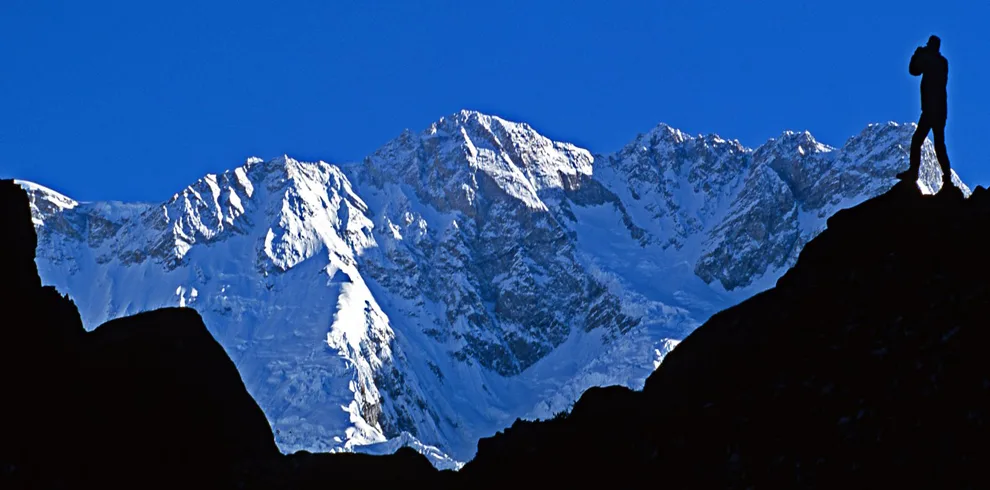
Another ideal time of year for the hike is autumn, which runs from late September to November. There is little rainfall, bright skies, and dry, stable weather throughout the post-monsoon season. Although the temperatures are lower than in the spring, they are still tolerable with the right equipment.
Because the monsoon rains assist to remove dust and pollution from the environment, autumn is also famed for its pristine mountain views. Trekkers are more popular during this time of year, so you can run into more other travellers on the trail.
Although trekking is most common in the spring and fall, trekking can also be done in the winter and during the rainy season, but these times provide more difficulties. Some parts of the path are challenging to traverse during the winter months of December through February due to the chilly weather and potential for significant snowfall.
Heavy rains during the monsoon season, which runs from June to early September, can cause landslides, slick roads, and poor visibility. Trekkers who decide to go on the journey during these off-seasons need to be flexible with their plans and well-prepared for the conditions.
Preparing for the Trek: Gear and Essentials
A successful and pleasurable hike to the Kanchenjunga South Basecamp Trek requires careful planning. Making sure you have the necessary equipment and necessities will help you travel in comfort and safety. It’s crucial to be prepared for every scenario because the walk will take you across a range of terrain and altitudes.
First and foremost, purchasing top-notch hiking boots is crucial. To avoid blisters and discomfort, your boots should be strong, waterproof, and well-broken in. To keep your feet dry and avoid fungal infections, bring multiple pairs of moisture-wicking socks with your boots. During steep climbs and descents, a decent pair of trekking poles can also be quite helpful for keeping your balance and lessening the pressure on your knees.
In order to cope with the fluctuating temperatures you will experience during the hike, layering your gear is essential. Wear insulating mid-layers, such fleece or down jackets, for warmth after starting with moisture-wicking base layers to keep perspiration away from your skin.
To shield you from rain, snow, and strong winds, your outer layer should be a windproof and waterproof shell. Remember to bring gloves, a warm hat, and a scarf or buff to shield your face from the cold.
You’ll need a sturdy backpack to carry your equipment in addition to clothes. It should be adequate to have a pack with a 40–60 litre capacity, adjustable straps, and a cosy hip belt for support.
To keep your possessions dry, make sure your bag has a rain cover. A first aid kit, a torch with extra batteries, a sleeping bag suitable for cold climates, and a portable filter or iodine tablet water purification system are other necessities.
Lastly, think about the extra equipment and accessories that will improve your trekking experience. Although many villages have teahouses and lodges, if you intend to camp along the road, a sturdy, lightweight tent is essential.
If you want to cook for yourself, pack a portable stove and cooking utensils along with a map, compass, and GPS device for navigation. Remember to bring high-energy foods, snacks, and any personal prescriptions you might require. You may completely appreciate the adventure and meet the obstacles of the Kanchenjunga South Basecamp Trek if you are prepared and equipped.
Highlighted Attractions Along the Route
The amazing sights and experiences you’ll come across on the Kanchenjunga South Basecamp Trek are just as important as getting to the basecamp. The experience is made remarkable by the distinctive features that each day of the walk delivers.
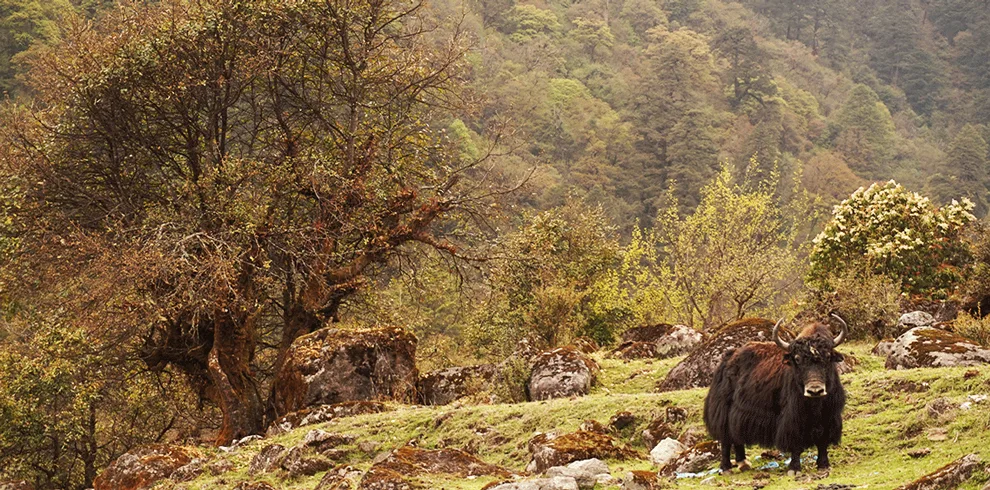
The Kanchenjunga Conservation Area, a protected area covering more than 2,035 square kilometres, is one of the main attractions. Numerous endangered species, including the snow leopard, red panda, and Himalayan black bear, can be found in this region’s varied flora and fauna. The region’s conservation initiatives seek to save the fragile ecology and advance eco-friendly travel. You will have the chance to see wildlife and take in the area’s natural beauty as you go around the conservation area.
Another pleasure of the journey is the isolated villages and communities that you come across. For ages, the Rai, Limbu, and Sherpa people that live in this area have maintained their distinctive customs and civilisations. These villages’ unique architecture, attire, and rituals provide a window into their traditional way of life. The walk gains a rich cultural dimension from interacting with and being welcomed by the locals.
The trek offers beautiful scenery and amazing views of the mountains. The journey is kept engaging and visually stunning by the shifting landscape, which ranges from the verdant lowland forests to the high-altitude Alpine meadows. The expansive view of Mount Kanchenjunga and the surrounding peaks is undoubtedly the highlight. The breathtaking view of the huge peak towering the surroundings is a reward for the difficult effort.
Accommodations and Food Options During the Trek
Along the Kanchenjunga South Basecamp Trek, lodging options range from simple teahouses and motels to campgrounds. The altitude and remoteness of the location determine the kind of lodging that is offered.
Teahouses and lodges with basic amenities like a bed, a blanket, and communal restrooms can be found in the settlements at lower elevations. After a strenuous day of hiking, these basic lodgings offer a cosy spot to unwind.
There are fewer teahouses and lodges available as you travel to higher altitudes and more isolated locations, and camping get more common.
In order to enjoy a more raw and daring experience, trekkers frequently pitch tents at approved camping locations. Camping lets you take in the peace and quiet of the mountains while immersing yourself in the natural environment. Having the right camping equipment, such as a sturdy tent, a cosy sleeping bag, and a portable cooking stove, is crucial.
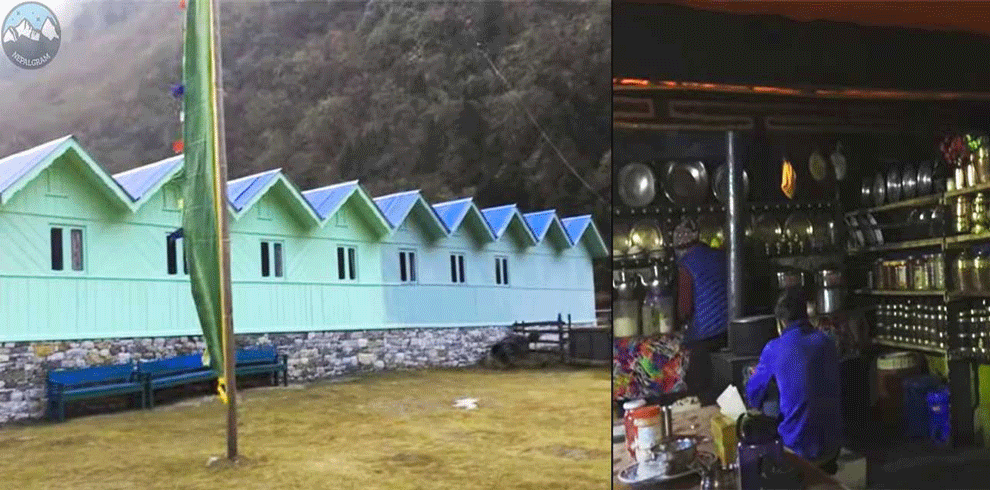
There are many different food options available along the journey, including both regional and foreign cuisine. Traditional Nepali dishes like momo (dumplings), thukpa (noodle soup), and dal bhat (rice and lentil soup) are usually available on the menu of teahouses and lodges.
The energy required for trekking is provided by these filling and nourishing meals. International meals including pasta, pancakes, and fried rice are available in addition to regional cuisine.
Maintaining a healthy diet and staying hydrated are crucial when trekking in isolated locations. You may maintain your energy levels in between meals by carrying high-energy snacks like energy bars, almonds, and dried fruits.
A portable water filter or water purification pills are necessary to guarantee that you have access to clean drinking water during the hike. Maintaining your strength and endurance during the difficult trek to the Kanchenjunga South Basecamp depends on eating a healthy diet and staying hydrated.
Safety Tips and Health Precautions
When starting the Kanchenjunga South Basecamp Trek, safety is of the upmost concern. Due to the trek’s remote location and difficulty, extensive planning and preparation are necessary to guarantee a fun and safe trip. Here are some crucial health and safety considerations to remember.
In order to avoid altitude sickness, which can happen at high altitudes because of the lower oxygen levels, acclimatisation is essential. It’s crucial to ascend slowly and take frequent rest days to give your body time to acclimatise to the altitude in order to reduce the danger of altitude sickness.
Drink plenty of water, abstain from alcohol and caffeine, and pay attention to your body. Headache, nausea, lightheadedness, and dyspnea are signs of altitude sickness. It’s crucial to descend to a lower altitude and, if required, seek medical assistance if you encounter any of these symptoms.
For the journey to be both safe and comfortable, the right equipment and attire are crucial. To protect yourself from the weather, make sure you have waterproof clothes, warm layers, and high-quality trekking boots.
Treating common illnesses and small injuries also requires a well-stocked first aid bag. Add supplies like bandages, antiseptic wipes, painkillers, and prescription drugs for typical trekking ailments like diarrhoea and altitude sickness.
Hiring an experienced guide and porter can significantly improve your overall experience and safety. A local guide can engage with nearby towns, offer insightful information about the trail, and assist with navigation.
Heavy loads can be carried by a porter so you can concentrate on the journey. Select a trustworthy trekking company that upholds moral standards and guarantees the welfare of its porters and guides.
Finally, keep up with the trail status and weather conditions at all times. It’s crucial to be ready for unexpected changes because the weather in the mountains may change quickly.
Trekking alone should be avoided, and you should always let someone know your itinerary and anticipated return date. You can reduce hazards and enjoy the Kanchenjunga South Basecamp Trek to the fullest by adhering to these health and safety precautions.
Cultural Insights and Local Communities
Immersion in the rich cultural history of the neighbouring people is made possible by the Kanchenjunga South Basecamp Trek. For many generations, the Rai, Limbu, and Sherpa people that live in this area have maintained their unique cultures, customs, and ways of life. Engaging with these communities deepens one’s awareness of their way of life and gives the journey a significant cultural component.
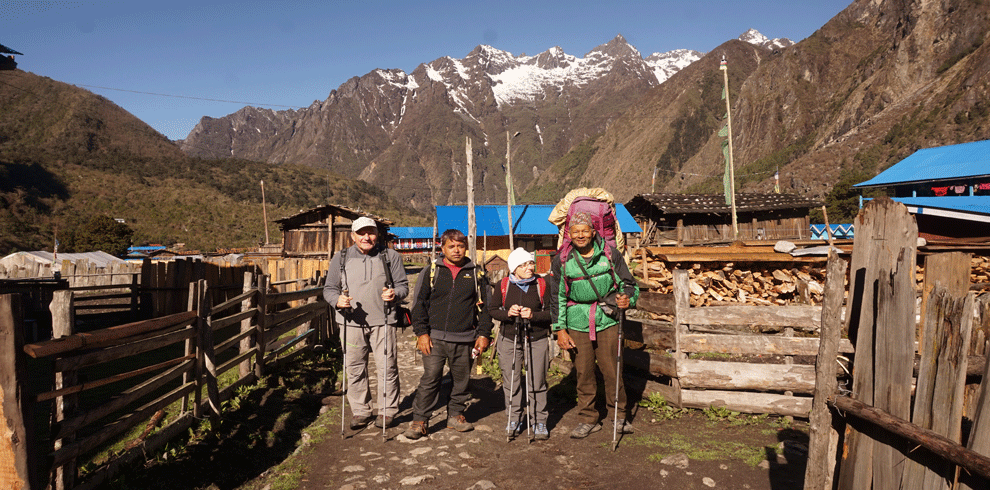
Native to Nepal’s eastern area, the Rai and Limbu people have a rich cultural history. They engage in shamanism and animism, and their customs and ceremonies are firmly anchored in their ties to the land and the natural world.
The Rai and Limbu populations are renowned for their distinctive handicrafts, colourful festivals, and traditional dances. A glimpse of their everyday lives, including their customary farming methods, residences, and attire, can be obtained by visiting their villages.
The Sherpa people, who are well-known for their ability to climb mountains, are also quite prevalent in the area. The monasteries, prayer flags, and stupas of the Sherpas, who practice Tibetan Buddhism, are notable landmarks.
The Sherpa culture is closely linked to their spiritual beliefs, and their interactions with trekkers demonstrate their strong sense of camaraderie and hospitality. Visiting a nearby monastery and taking part in a typical Sherpa lunch can offer insightful cultural experiences and a greater understanding of their way of life.
 Big Group? We can help safer